
Winning Borrower Trust with Emotional Intelligence
A mortgage deal runs on emotions as much as on numbers. At first, a borrower celebrates finding the right home, but then worries about everything that follows, from qualifying to the final document request. Managing that emotional side is a skill, and behavioral science gives it structure.
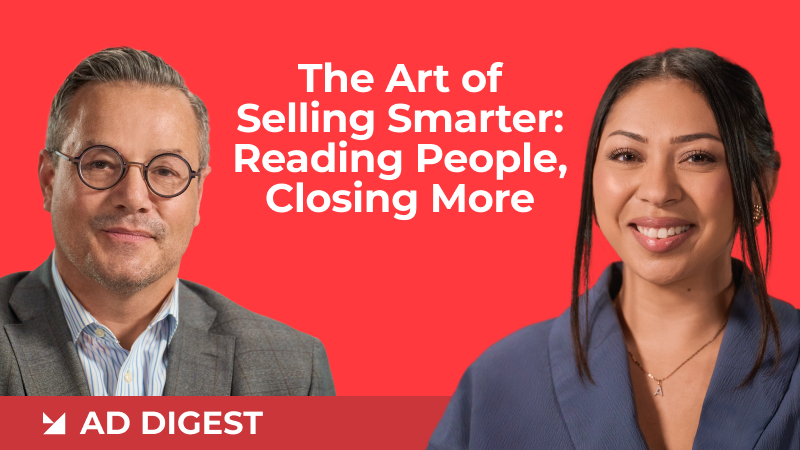
AD Mortgage produces Mortgage Digest, a video series with practical advice for mortgage professionals. In this episode, Serena Diaco, Sales Trainer at AD Mortgage, speaks with Nathaniel Bittman, a behavioral science and DISC certified trainer with nearly 30 years in the mortgage industry.
Nathaniel explains how reading behavioral styles helps mortgage loan originators (MLOs) calm anxious borrowers and keep deals on track.
What is DISC?
The DISC framework comes from psychologist William Marston. It describes four primary styles that shape how a person handles any situation, from a contract negotiation to a morning commute:
- Dominant (D) – fast-paced and assertive, welcomes a challenge
- Influence (I) – talkative and energetic, connects through stories
- Steady (S) – calm and patient, prefers a predictable pace
- Conscientious (C) – analytical and cautious, focused on data and process
Bittman found the method through his own frustration. Early in his career, he had no fear of cold calls or audiences, yet he could not connect with certain clients, and he wanted to know why. DISC gave him the answer: where a person falls on the DISC profile determines how they handle a situation, and two mismatched styles will talk past each other.
How Does DISC Help MLOs Read Their Borrowers?
DISC helps MLOs identify their own communication style and match it to the way a specific borrower receives information best. A purchase transaction keeps the borrower under pressure at every stage, and emotions drive much of the outcome. Bittman points to a figure he uses in his trainings: “What science has shown us is that 60% of the consumer’s decision is predicated on emotions.”
With a clear read on the borrower’s style, MLOs can deliver the same information in the form the client will best absorb. Nathaniel explained that sometimes professionals forget to study the person in front of them, and concentrate on how they sound and look instead:
“Where people make tactical mistakes in DISC is they don’t do a good enough job observing the other person’s style and then really playing to that.”
MLOs and Underwriters Communicate Differently. Why?
Sales and operations attract opposite behavioral styles. Mismatch explains most of the friction between the two sides of a mortgage company:
- Loan originators tend toward high D and high I. These are fast-paced and assertive people who aren’t deterred by a volatile market.
- Processing and underwriting draw high S and high C. These are methodical professionals who move at a slower, more analytical pace before making final decisions.
Bittman warns that the gap can break a deal when a loan moves from one side to the other:
“If the Dominant style person doesn’t know how to communicate effectively with the person that is high in Compliance or high in Steady, it’s not going to work. Someone is going to have to give.”
To avoid that, you need to observe the other person’s style first and then adapt your delivery to it.
- A high D or high I communicating with a high C or high S. In that case, pace and storytelling work against you. Slow down and lead with the facts and the process. Bittman explains the reframe he uses when the recipient is Compliance-driven: “I might navigate it to say, ‘Let’s get to the point. Let’s be more data driven’, because this client is all about data and getting to the facts that are most important.”
- A high S or high C facing a high D. In these situations, don’t try to agree with the counterpart automatically. “Dominant style people that have a challenging disposition want to work with people that are equally as challenging or confident,” Bittman explains. A high D reads confidence as reassurance that you think and operate the way they do, so hold your ground and push back at the right moment to earn room for negotiation and respect.
Why Do Mortgage Professionals Need Emotional Intelligence (EI)?
Loan originators and other professionals in the industry need emotional intelligence because adapting to another person’s style starts with managing your own state. While DISC shows you how to adjust, Emotional Intelligence decides whether you can do it in the moment.
Bittman breaks emotional intelligence into four quadrants:
- Self-awareness – recognizing what you feel before you engage a client
- Self-management – bringing yourself back to balance when you notice you are off
- Social awareness – understanding what the other person experiences below the surface
- Relationship management – guiding the interaction to an outcome that works for both sides
According to Bittman, self-awareness carries the most weight for staying balanced. A professional who walks in carrying stress from home or the commute transmits it to everyone nearby, including the borrower.
“Sometimes real estate agents and mortgage professionals fail, because they’re not checking themselves at the door. They’re not being self-aware before they engage the consumer in what will absolutely be one of the most emotional experiences in their lives.”
Where Should Brokers Start with DISC?
Bittman recommends that mortgage professionals start with a full DISC profile. First, complete the assessment, then study your strengths and limitations, including the limitations that can double as strengths. Cover the theory with free resources, from TED Talks on emotional intelligence to AI tools, and then practice during real conversations.
As he puts it: “If you invest yourself in it, really learn it, and make it part of your life, it will make a difference.”
AD Mortgage is a wholesale mortgage lender. We work with Broker Partners nationwide and support their growth with training and educational content like the Digest series. Want to know how to handle skeptical borrowers and why two talkative people can talk for an hour and close nothing? Watch the full conversation with Nathaniel Bittman on YouTube.