

For real estate investors, qualifying for a traditional mortgage based on personal income can sometimes be challenging – especially for self-employed borrowers, investors with multiple properties, or borrowers with significant business deductions.
A Debt Service Coverage Ratio (DSCR) mortgage offers an alternative approach. Instead of relying primarily on the borrower’s personal income, DSCR financing focuses on the income generated by the investment property.
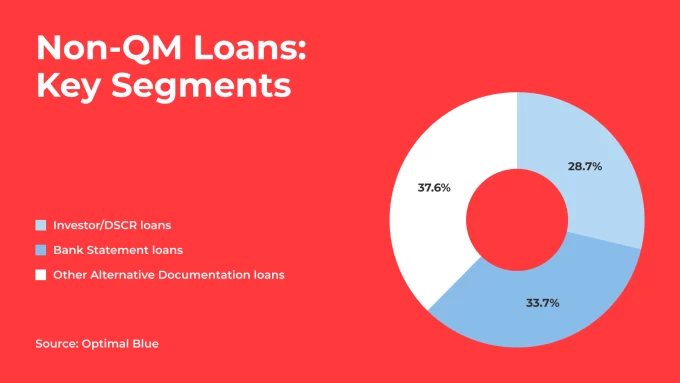
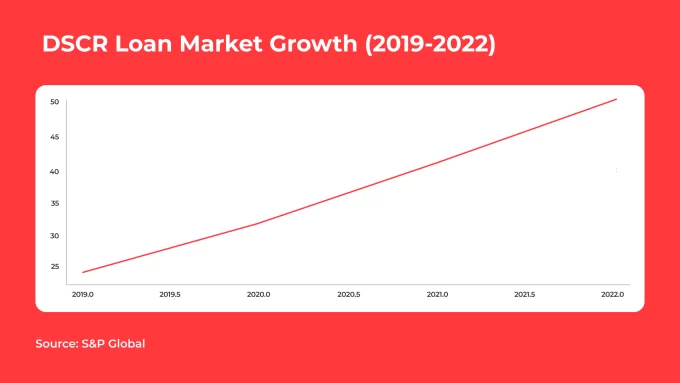
When structured properly, a DSCR loan can be a powerful tool for purchasing or refinancing rental properties and expanding a real estate portfolio. According to AD Mortgage’s Non-QM Fuels Mortgage Industry in 2026 Report, DSCR is the most used Non-QM solution.
What is a DSCR Mortgage?
DSCR stands for Debt Service Coverage Ratio. It measures whether the property’s qualifying rental income is sufficient to cover its debt obligations.
DSCR = Qualifying Rental Income ÷ Qualifying Monthly Debt Service
Depending on the lender and program, qualifying monthly debt service may include principal, interest, property taxes, insurance, association dues, and other applicable housing expenses.
For example, if a property generates $5,000 per month in qualifying rental income and the lender’s qualifying monthly debt service is $4,000, the DSCR is 1.25. A 1.25 DSCR means the property’s income is 125% of the qualifying debt service.
DSCR requirements vary by lender and program. Some lenders may allow a DSCR below 1.00, while others may require 1.00, 1.20, 1.25, or higher.
Why Investors Use DSCR Loans
DSCR financing can be especially attractive to investors who:
- Own multiple investment properties
- Are self-employed
- Have complex tax returns
- Have substantial business deductions
- Want to qualify primarily based on property cash flow
- Are building a rental portfolio
- Prefer to hold investment properties in an LLC
The major advantage is that the lender may place greater emphasis on the property’s ability to support the proposed debt rather than relying entirely on the borrower’s employment income.
1. Start With the Property
The best way to structure a DSCR loan is to start with the investment property, not the desired loan amount.
First determine:
- Purchase price or current market value
- Expected rental income
- Property taxes
- Insurance
- HOA dues, if applicable
- Proposed loan amount
- Interest rate
- Monthly debt service
- Resulting DSCR
The key question isn’t simply: ‘How much can I borrow?’ It is: ‘How much debt can this property support?’

2. Determine the Qualifying Rental Income
Rental income is one of the most important components of a DSCR loan.
Depending on the lender and property, qualifying income may be based on:
- An existing lease
- Market rent determined by the appraisal
- Historical rental income
- Short-term rental revenue
- Other lender-approved documentation
Investors should not assume that the rent they currently collect – or expect to collect – is automatically the amount the lender will use.
3. Understand LTV and Down Payment
Loan-to-value (LTV) is another major component of DSCR financing.
A lower LTV generally reduces the lender’s risk and may improve the overall loan structure. The best structure balances the investor’s desired leverage with the property’s cash flow.
4. Interest Rate Directly Affects DSCR
A higher interest rate generally creates a higher monthly payment, which can reduce the DSCR.
Compare more than just the interest rate:
- Interest rate
- Points and fees
- Maximum LTV
- DSCR requirement
- Loan term and amortization
- Prepayment penalty
- Reserve requirements
- Property eligibility
- LLC/entity requirements
5. Consider Interest-Only Financing
Some DSCR programs offer an interest-only payment option. A lower initial payment may improve DSCR and cash flow, but the required interest-only payments do not reduce the principal balance.
Investors should evaluate future payment changes, remaining loan balance, cash flow, appreciation, refinance plans, holding period, and exit strategy.
6. Pay Attention to Property Type and Zoning
Not every property qualifies for every DSCR program. Depending on the lender, eligible properties may include single-family homes, 2-4-unit properties, condominiums, townhomes, certain planned-unit developments, and short-term rental properties.
Additional complications can arise with mixed-use characteristics, commercial zoning, nonconforming zoning, unpermitted improvements, multiple units, agricultural characteristics, or significant acreage.
Always verify zoning, legal use, appraisal requirements, and lender eligibility before assuming the property qualifies.
7. Decide How the Property Will Be Held
Many investors prefer to own investment properties through an LLC. Some DSCR lenders allow loans to close in an LLC or other eligible business entity.
Requirements can include articles of organization, an operating agreement, an EIN, a certificate of good standing, other entity documentation and a personal guaranty.
8. Don’t Forget Credit and Reserves
Although DSCR loans focus heavily on the property, the borrower still matters. Credit can affect interest rate, maximum LTV, eligibility, reserve requirements, and pricing.
Many DSCR lenders also require sufficient assets or reserves after closing. Requirements vary by lender, loan amount, property type, DSCR, credit profile, and number of financed properties.
9. Understand the Prepayment Penalty
Some DSCR programs have penalties if the investor sells or refinances the property within a specified period. For an investor planning a shorter holding period, the prepayment provision can have a significant financial impact.
Compare the total cost and flexibility of the loan – not just the interest rate.
10. Always Have an Exit Strategy
Every DSCR loan should have a clear investment strategy. Consider the planned holding period, whether the property will remain a rental, potential refinancing or sale, expected rent growth, appreciation, and the prepayment penalty.
Common DSCR Structuring Mistakes
The difference between a financeable DSCR deal and a declined one often comes down to what the borrower overlooks before the lender begins underwriting.
- Starting with the desired loan amount instead of the property’s economics
- Assuming all rental income qualifies
- Ignoring taxes and insurance
- Focusing only on interest rate
- Waiting to address entity structure
- Ignoring zoning and legal use
- Failing to plan the exit strategy

Final Thoughts
DSCR financing can be an effective tool for investors who want to purchase or refinance rental properties based primarily on the property’s ability to generate income.
The strongest DSCR transactions are structured around four components:
- Property – Is it eligible and capable of generating sufficient rental income?
- Financing – Does the LTV, interest rate, payment, and DSCR make sense?
- Borrower – Are credit, assets, reserves, and entity requirements satisfied?
- Exit Strategy – Does the loan fit the investor’s intended holding period?
The goal shouldn’t simply be, ‘Can I qualify for a DSCR loan?’ The better question is, ‘How can I structure the financing so the property, loan, cash flow, and investment strategy work together?’
AD Mortgage offers DSCR loan programs, designed to assist new and experienced real estate investors in financing their properties. The program accepts DSCR as low as 0, CLTV up to 80%, and minimum FICO of 620.
The article is written by Ramiro Garcia, Mortgage Loan Originator. NMLS #342036