What Happens After Closing? Dmitri Batsev on Securitization and the 2027 Outlook
What happens to mortgages after closing, and how does investor demand influence the pricing and loan programs available to brokers? Dmitri Batsev, Managing Director at Imperial Fund Asset Management, has the answers.
He joins Alexandria McLymont in the latest episode of AD Mortgage Digest to share his insights into the secondary market and discuss the risks and opportunities brokers should keep in mind in 2027.
How Imperial Fund Asset Management and AD Mortgage Work Together
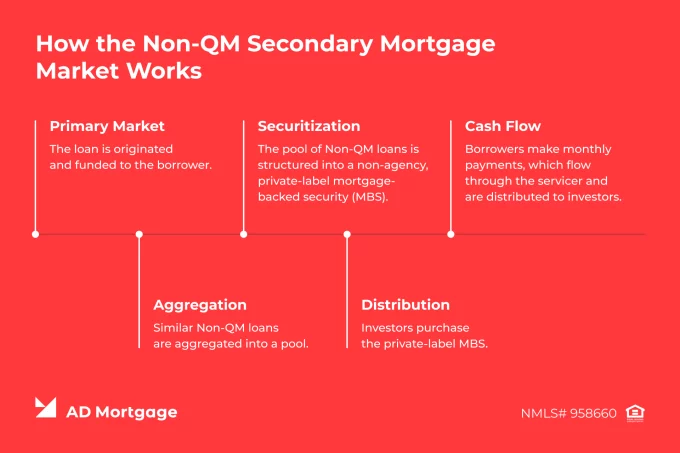
Compared with other mortgage companies, Imperial Fund Asset Management has a unique setup thanks to its close relationship with AD Mortgage, a 5-star wholesale lender. After AD Mortgage originates a non-agency loan, Imperial Fund buys it and then either securitizes it or includes it in other investment products.
With a dozen years in the industry, Imperial Fund has a well-established securitization shelf under which it regularly issues residential mortgage-backed securities (RMBS) backed by non-agency mortgage collateral. The underlying loans are mostly serviced by AD Mortgage, though not exclusively. In addition, Imperial Fund offers other investment products focused on residential mortgage credit to both institutional and individual clients.
‘Once the loan is originated, it needs an outlet. This is where we are set up with AD Mortgage in a pretty unique way – we can provide consistent takeout,’ explains Dmitri. Unlike loans eligible for agency securitization, non-agency loans rely on private-market buyers. A consistent exit for those loans is paramount for any lender.
‘Having a partnership with AD Mortgage is beyond synergetic.’
What Drives Investor Demand for U.S. Mortgages
Currently, the U.S. residential mortgage market represents about $14.6 trillion in assets – roughly twice the size of other consumer lending categories combined, including auto loans, credit cards, and student loans.
In recent years, non-agency loan originations have increased rapidly. Now, borrowers who do not meet traditional standards but have strong financial profiles can qualify, and Non-QM loans have become mainstream.
‘The acceptance of Non-QM mortgages has grown wider within the broker community, within the lender community, and, critically, it has gotten big acceptance within the investor community – which drives the demand.’
Dmitri shares the numbers: around $120 billion in Non-QM loans were originated in 2025. Around half of that went to insurance companies – which have high demand for residential mortgages due to their good risk profiles and potentially attractive coupon yields.
‘Insurance companies have very long-dated liabilities and they need assets to match it. And what is better to match it than a 30-year residential mortgage with a very good credit profile?’
How Rating Agencies Evaluate Loans During Securitization
The process begins with Imperial Fund pooling mortgages, making sure they are diversified and have overall characteristics attractive to investors. ‘We don’t just focus on AAA buyers – people who are buying lower tranches are equally important.’
After pooling the mortgages, Imperial Fund submits the mortgage-backed securities to rating agencies such as S&P, Fitch, or KBRA for evaluation.
‘The rating agencies are very data-driven. They want to see history – it is a good thing that there is a lot of history on U.S. mortgages and loans originated that get into the pools.’
How Market Insights Inform Pricing and Loan Programs
While AD Mortgage services loans, Imperial Fund talks with investors directly – and the companies’ exchange of information allows them to adjust pricing and loan programs efficiently.
‘We can offer unparalleled insights to our partners, our brokers, and other lending partners that they do not receive otherwise.’
Risks and Opportunities for Brokers in 2027
As the ever-changing market is experiencing volatility, Dmitri highlights several things for brokers to keep in mind during the next 12 months:
‘Despite this near-term volatility, we feel like the non-agency market will continue to grow. I see the broad range of participants in our securitization – from established domestic players, including insurance companies, to European and Asian bond buyers – and I feel like this acceptance will only become more mainstream.
The biggest risks are macroeconomic. But we are pretty optimistic as the mortgages that have been underwritten during the last five to seven years are in really good shape in terms of key characteristics like FICO and DTI.’
Dmitri emphasizes the importance of partnering with the right lender: ‘I think from a broker’s standpoint, the most important thing is to make sure that you stick with the lender partners that you know. We have over 20 years of experience working with brokers, and we have longevity.’
AD Mortgage is the top 5 wholesale lender, partnering with brokers and loan originators from coast to coast. Complete the Broker Package to gain access to a broad range of mortgage programs, award-winning innovative technology, and 24/7 expert support.