
The Self-Employed Borrower isn’t a Problem File. They are Your Best Referral Source
Every loan officer has heard it: ‘My CPA did a great job – I barely show any income.’ For a lot of LOs, that sentence ends the conversation. For brokers who know how to work Non-QM, it’s where the conversation gets good.
Here in Tampa Bay, a huge share of the buyers walking through open houses are self-employed: contractors, realtors, salon owners, insurance agents, gig workers, and small business owners. Many of them have been told ‘no’ by a bank before they ever call us. That’s exactly why they’re worth your time. Win them once, do it right, and they become loyal clients who send you their friends, their employees, and their business partners.
Here’s the playbook I use to turn self-employed files from headaches into closings.
1. Ask the Right Question First
Don’t start with ‘What’s your income?’ Start with ‘How do you get paid, and how long have you been doing it?’ The answer tells you which door to open:
- Consistent deposits into a business or personal account → bank statement program.
- Clean books with a CPA-prepared profit and loss → P&L-based program.
- Significant liquid assets but irregular income → asset-based qualifying.
- Buying a rental and the property cash-flows → DSCR, where the property’s rent does the qualifying.
Getting this right in the first 10 minutes saves you from collecting the wrong documents for two weeks.
2. Pull the Statements Before You Quote Anything
The biggest mistake I see is pricing a bank statement loan off the borrower’s estimate of their deposits. Self-employed people are optimistic about their numbers. Get 12 or 24 months of statements up front, run the deposits yourself, and back out transfers between accounts and anything that looks like a one-time deposit.
Underwriting will do it anyway, so you might as well know the real number before the borrower falls in love with a house.
3. Set Honest Expectations About Rate and Down Payment
Non-QM is not a consolation prize, but it isn’t priced like agency paper either. Tell the borrower early that the rate will typically be higher than a conventional loan and that down payment and reserve requirements may be larger.
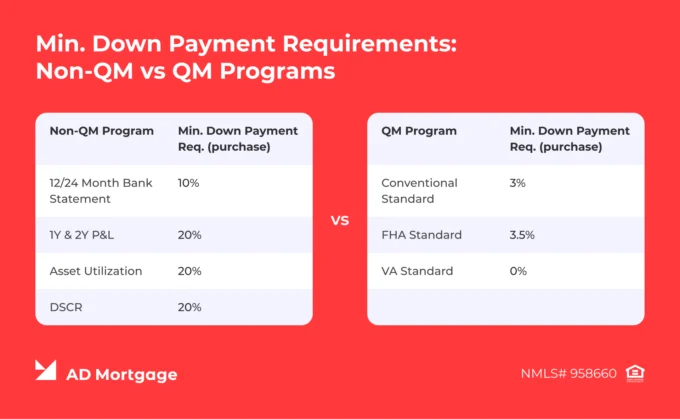
Then show them the math: the alternative is often waiting two years and amending tax returns while home prices and rents keep moving. When you frame it as a strategy with an exit plan, such as refinancing into conventional once their tax returns support it, borrowers feel guided instead of upsold.
4. Treat the Realtor as Part of the Team
Realtors are nervous about self-employed buyers because they’ve watched deals fall apart at the finish line. Call the listing agent, explain how the program works, and give a realistic timeline. A pre-approval backed by a real review of bank statements carries far more weight than a generic letter. That one phone call is how you go from ‘the lender’ to ‘my lender’ in a realtor’s phone.
5. Build a Clean File, and Then Communicate Relentlessly
Self-employed files generate more conditions: business license or CPA letter, explanations for large deposits, proof of ownership percentage, sometimes a business-use-of-funds letter. Collect what you can predict before submission. When conditions do come in, clear them fast and follow up just as fast. A condition that sits in a queue for days is where these deals die. Weekly updates to the borrower and the agent, even when there’s no news, keep everyone calm.
6. Don’t Forget the Investor in the Room
Many self-employed borrowers are also building rental portfolios. Once you’ve closed their primary residence, ask about their next property. DSCR financing lets them qualify off the property’s rental income instead of their personal returns, and in a market like Florida, where investors are active and rents are strong, that conversation often leads to a second and third loan.

7. Close the Loop and Ask for the Referral
After closing, self-employed borrowers are some of the most grateful clients you’ll ever have, because they remember every bank that turned them away. Ask for a review. Ask who else in their world is self-employed. Contractors know other contractors. Business owners know other business owners. One well-run bank statement loan can quietly turn into your best lead source of the year.
The Bottom Line
Self-employed borrowers aren’t problem files. They’re underserved clients who need a loan officer willing to understand how they actually make money. Learn the programs, do the homework up front, communicate like a pro, and you’ll own a niche most of your competition is too busy to touch.
This article was written by Mark Adwell (NMLS#1693869), Producing Branch Manager, The ReMarkable Mortgage Team powered by Success Mortgage Partners (NMLS#130562).