
U.S. Economy Q3 2026 Overview: Fed Rate Hike, Mortgage Rates, and Inflation

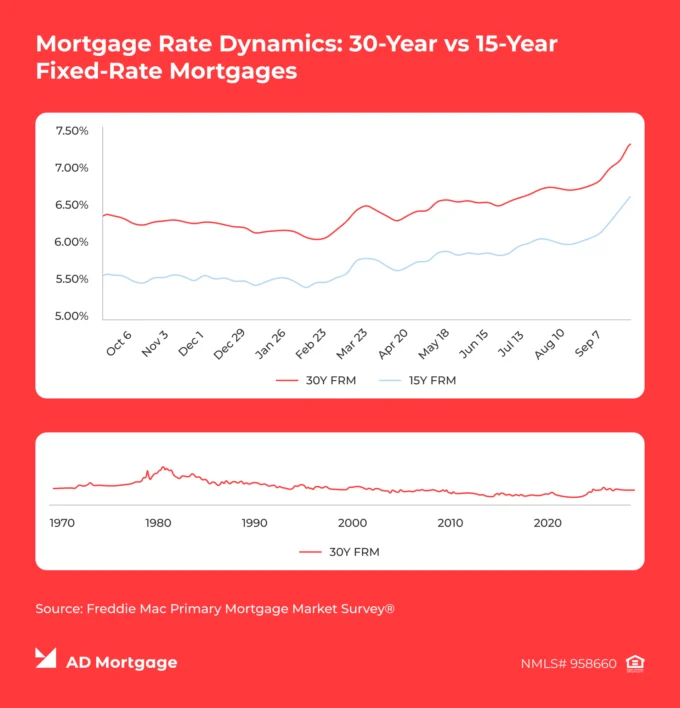
During the third quarter, the U.S. economy faced continued volatility as the Federal Reserve raised its benchmark rate, Treasury yields climbed, inflation remained elevated, and energy prices moved higher. These pressures pushed average 30-year mortgage rates to nearly 7.30%, adding challenges for borrowers and the housing market.
In the latest economic update from AD Mortgage, we review the key economic data from Q3 2026 and explain what it means for mortgage professionals.
Fed Hikes Rates 25 Basis Points – and Treasury Yields Surge
For the first time since July 2023, the Federal Reserve raised interest rates. While core PCE inflation slowed to 3.0% year over year in August, headline inflation remained elevated at 3.4%, driven largely by energy costs and bolstered by strong domestic spending. Together with geopolitical uncertainty, these pressures prompted the 25-basis-point increase, which brought the federal funds rate to 3.75%-4.00%.
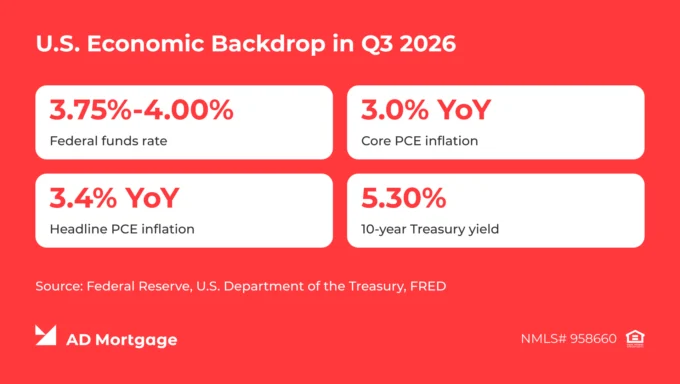
At least one, and possibly two, more 25-basis-point hikes are expected before the end of 2026.
The hike – combined with ongoing inflation concerns and expectations of a higher-for-longer policy stance – drove a sharp rise in Treasury yields. The 10-year Treasury yield reached 5.30%, its highest level since 2002.
Broker Takeaway: Higher rates are likely to weigh on both purchase and refinance demand. In a high-rate environment, flexible loan structuring and realistic borrower prequalification are becoming increasingly important. Use Quick Pricer Pro, available in the AIM Partner Portal, to quickly price and compare scenarios and match your client with the right solution.
Housing Market Activity: Rates and Prices Up, Applications Down
Mortgage rates adjusted quickly to the Fed’s rate increase. According to Freddie Mac data, the average 30-year fixed mortgage rate rose from 6.43% in early July to 7.28% as of October 1 – its highest level since November 2023.
Higher interest rates, along with increased labor and material costs, contributed to lower new construction activity. Housing starts averaged 1.292 million units per month in Q3, down from 1.345 million in Q2.
At the same time, housing prices grew 2.6% year over year in July 2026, according to FHFA data, up from 1.7% at our last review.
The combination of higher rates and reduced affordability slowed mortgage activity. Purchase applications fell 6.5%, while refinance applications declined 18.8%.
Broker Takeaway: As refinancing activity is likely to continue to decline, second mortgage solutions may offer homeowners a way to access home equity without replacing their existing first mortgage. Review the program guidelines to determine whether this option fits your client’s needs: Second Mortgage | Second Home Loan | AD Mortgage
What Q4 2026 May Bring
Due to geopolitical events and increased energy prices, the Fed is expected to raise rates at least once more. A stabilization of the Middle East conflict might positively affect rates and make the overall economy more balanced.
In the housing market, home prices are not expected to grow significantly. Instead, they will likely hold steady or decline slightly, depending on inventory. According to Realtor.com data, 20.8% of active listings had a price cut in September, while less than 1% of active listings experienced a price increase. At the same time, the number of active listings on the market grew by 5.4% year over year.
As market conditions continue to evolve, having a clear view of your client’s financing options is a way to move forward with confidence. To review pricing, eligibility, and potential loan structures for your client’s scenario, submit a scenario request.