
Wisconsin Housing Market Q3 2026: What Brokers and LOs Need to Know
| Share Your Voice |
|---|
| Take Our Year-End Survey to Get 500 Loyalty Points and Exclusive Summary TAKE SURVEY |
Wisconsin’s housing market offered buyers more choice in Q3 2026, with active listings up 22% year over year. Yet selling times remained nearly unchanged, and sale prices rose 5.5%, suggesting that additional inventory had not translated into broad price relief.
This report examines Wisconsin’s economic and housing indicators and what they could mean for brokers, loan officers, and their clients heading into Q4.
Wisconsin Economy in Q3 2026
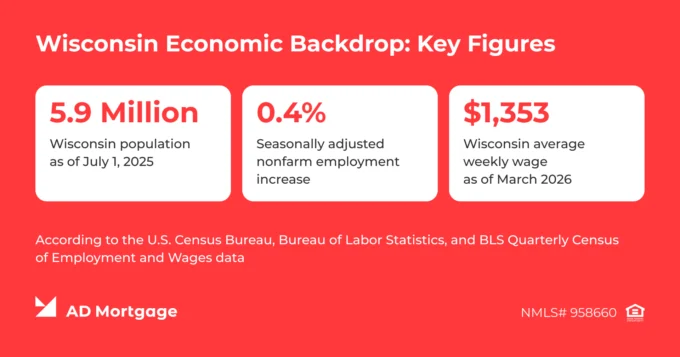
According to the latest U.S. Census Bureau state estimates, Wisconsin’s population reached 5,972,787 in 2025. Adults ages 18 and older accounted for 79.5% of residents.
In Q3, seasonally adjusted nonfarm employment reached 3,048,600 jobs on average, a slight 0.4% increase compared to 3,036,300 in Q3 2025.
Wages also rose. BLS data show a 3.7% increase in the average weekly wage, reaching $1,353.
Broker Takeaway: Although wages rose, whether those gains translate into greater purchasing power depends on housing costs and other factors. Use these economic indicators as a starting point, then focus on the borrower’s scenario – income, existing obligations, and expected monthly housing payment.
Wisconsin Housing Inventory: Active Listings Rose 22% Year Over Year
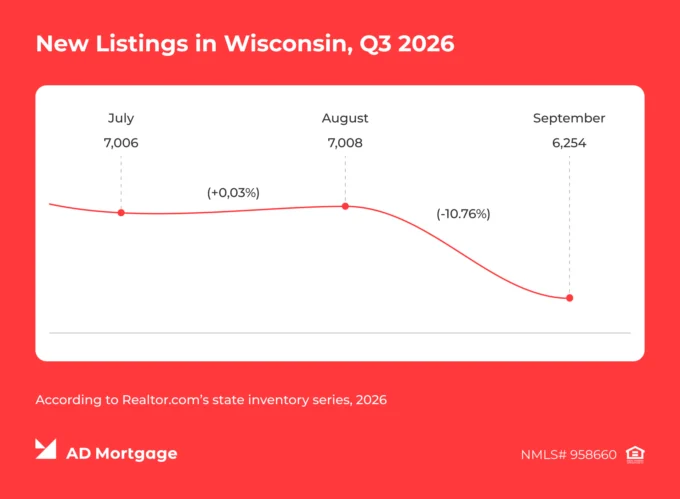
Active listings – the number of properties listed for sale, including new and existing ones – have been increasing since the beginning of the year. As reported in the Realtor.com state inventory series, there were 15,106 homes on the market in July, and the number reached 15,857 in September. In the third quarter, active listings averaged 15,500, up 22% year over year compared with 12,737 in Q3 2025.
The number of new listings also increased – although not as substantially. A total of 20,268 new listings were recorded in Q3 2026, up 1.3% from Q3 2025.
The third indicator that helps explain housing inventory dynamics is days on the market. In Q3 2026, the average of the monthly median days on market in Wisconsin was 43 days, compared with 42 days the previous year.
Broker Takeaway: While Wisconsin buyers have a broader range of housing options to choose from, nearly unchanged selling times suggest that more inventory has not translated into a substantially slower market.
For existing homeowners exploring financing options in a high-rate environment, a second mortgage may be worth considering – especially with AD Mortgage’s improved pricing and terms throughout November.
Wisconsin Home Prices: Sale Price Climbed to $320,249 as Listing Prices Eased
Sale prices are a key housing market indicator. According to Zillow data, the average of Wisconsin’s regional median sale prices reached $320,249 in Q3 2026, up 5.5% from the same period a year earlier.
Meanwhile, the median listing price declined each month during the quarter, reaching $389,900 in September, according to Realtor.com data. The decline follows a consistent seasonal pattern observed in previous years, with listing prices peaking in summer and declining through the end of the year.
A total of 355,015 homes were sold in Q3 2026, up 1.29% from 350,489 in Q3 2025, according to Zillow research. However, monthly sales declined over the quarter, from 129,833 in July to 109,432 in September.
Broker Takeaway: Price fluctuations can shape borrowers’ expectations, but the focus should remain on each client’s financial situation. Pay particular attention to total homeownership costs, including insurance and property taxes. In Wisconsin, homeowners insurance averages $1,836 annually for $300,000 in dwelling coverage, while Tax-Rates.org reports average annual property taxes of 1.76% of assessed fair market value.
Homeownership and Mortgage Use in Wisconsin
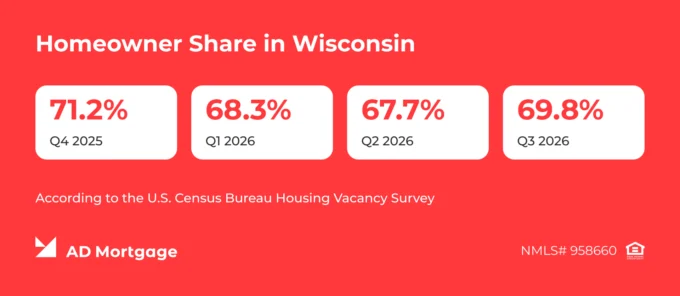
According to the U.S. Census Bureau’s Housing Vacancy Survey, Wisconsin’s homeownership rate reached 69.8% in Q3 2026, up 2.1 percentage points from 67.7% in Q2. In other words, approximately seven in ten occupied housing units were owner-occupied.
Separately, 2024 American Community Survey data show that approximately 60% of Wisconsin’s owner-occupied housing units had a mortgage. This provides additional context on existing homeowners rather than a measure of current borrowing activity.
Broker Takeaway: These figures provide a reason to look beyond purchase transactions when reviewing client needs. For existing homeowners considering a financing change, start with their current mortgage terms, outstanding balance, and goals. Keep the conversation focused on whether a new loan would address a specific need – not simply whether the borrower already has a mortgage.
Wisconsin Housing Market Outlook for Q4: What Brokers Should Look for
Third-quarter figures tell two different stories: buyers had more homes to choose from, but selling times changed little and sale prices remained above year-earlier levels. As Q4 unfolds, the question is whether that larger selection will translate into more workable transactions – not simply more listings to browse.
Watch these three indicators as Wisconsin moves through Q4:
- Active Inventory and New Listings. Track whether active inventory continues to grow after its 22% year-over-year increase in Q3, and whether new listings pick up after rising just 1.3%. Follow both measures to distinguish a larger supply of available homes from an increase in properties entering the market.
- Days on the Market. Watch whether selling times lengthen after averaging 43 days in Q3, compared with 42 days a year earlier. More inventory alongside longer marketing times would offer a stronger indication of easing competition than inventory growth alone.
- Listing and Sale Prices. Monitor whether listing prices continue their seasonal decline and whether year-over-year sale price growth moderates. Review these measures together but keep their different meanings in mind: asking prices reflect sellers’ expectations, while completed sale prices reflect what buyers paid.
Broker Takeaway: Use Q4 to turn market observations into specific borrower decisions. Instead of labeling Wisconsin a buyer’s or seller’s market, help clients understand what has changed for the homes they can realistically purchase – and what has not changed about their financial limits.
When a client’s plans change, revisit the financing options, too. Explore AD Mortgage’s program portfolio, including Conventional, Government, Jumbo, and Non-QM options, to choose the solution that suits the borrower’s circumstances best.