Top 10 Cheapest Places to Live in Michigan in 2026
October 11, 2026
Add AD Mortgage as your preferred source on Google
This article was originally published on October 25, 2024, and updated in October 2026.
Michigan remains one of the few states where a household with an ordinary income can still buy a house. In the 10 communities ranked here, the typical home sold for between about $42,000 and $139,000 over the three months ending August 2026. In every one of them, the local median household income was higher than the income needed to carry a median-priced home on our assumptions.
Low prices do not mean easy deals. Michigan buyers face a property tax reset after purchase, city income taxes in several cities, older housing stock and very small loan amounts that some lenders avoid. This guide covers both sides: where homes are cheapest relative to local incomes, and what that means for the people buying them and the brokers financing them.
Methodology
We evaluated homebuying affordability by comparing median home sale prices with local median household incomes across the ten Michigan communities in this guide.
Home prices come from Redfin’s August 2026 market updates for all home types, with price summaries covering the three months ending August. Local incomes use the U.S. Census Bureau’s 2020–2024 American Community Survey five-year estimates, as reported by Data USA. These income figures are historical estimates, rather than measurements of 2026 earnings.
For each community, we estimated the monthly cost of buying a median-priced home using a 20% down payment, a 30-year fixed mortgage and the interest rate, property-tax and insurance assumptions detailed in the table. We then calculated the gross annual income needed to keep that payment at 28% of household income.
Places are ranked by their income gap:
Income gap = Estimated required annual income − Local median household income
A smaller gap indicates a smaller estimated income shortfall. A negative gap means local median household income exceeds the modeled income target. The separate price ranking shows which communities have the lowest purchase prices.
This comparison includes cities and unincorporated communities. It does not measure total living costs or guarantee mortgage eligibility. HOA fees, utilities, maintenance and closing costs are excluded, and small-market prices and income estimates can fluctuate.
Home Prices vs. Local Incomes in Michigan’s 10 Most Affordable Places
Home Prices vs. Local Incomes in Michigan’s 10 Most Affordable Places
Data compiled October 12, 2026. Median sale prices cover the three months ending August 2026 for all 10 places, from Redfin. Price rank shows the order by median sale price among these 10 places (1 = cheapest).
Financing assumptions: 20% down payment, 30-year fixed mortgage and a 7.40% interest rate (Freddie Mac PMMS, October 8, 2026). All payment and income requirements are estimates.
² Required annual income is the income needed to keep the estimated monthly payment at 28% of gross income: monthly payment × 12 ÷ 0.28.
³ Local median household income comes from the U.S. Census Bureau’s 2020–2024 American Community Survey five-year estimates, as reported by Data USA. These are historical estimates, rather than measurements of 2026 earnings.
⁴ Income gap = required annual income − local median household income. A negative value means local median income exceeds the income needed (a cushion); a positive value would mean a shortfall.
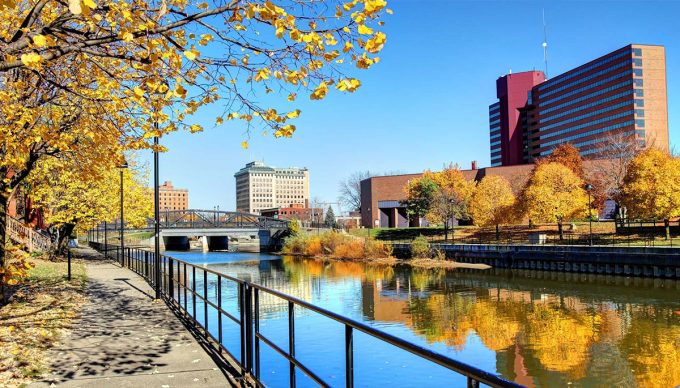
Buena Vista is an unincorporated community inside Buena Vista Charter Township, on the eastern edge of Saginaw. It tops this list because a median-priced home here sold for about $53,000, while local households earn a median of about $42,000. On our assumptions, a household needs roughly $17,400 a year to keep the payment within 28% of income. That leaves the widest cushion of any place we ranked.
Jobs anchor the community. Nexteer Automotive’s Buena Vista Township plant makes power steering and driveline parts and employs about 1,100 people, making it one of Saginaw County’s largest employers. Nexteer cut about 80 jobs across this plant and its Auburn Hills site in May 2025, so auto-supplier cycles matter here. The Saginaw metro’s August 2026 unemployment rate was 5.8%, above the statewide 5.2%.
The township is actively investing in its housing. In spring 2026 it received about $472,000 for owner repairs, at up to $9,999 per household, and nearly $943,000 to place 10 new manufactured homes for sale to any buyer, a plan it promoted at a May 2026 housing summit.
What borrowers should know
At this price, a 20% down payment is about $10,600. Many buyers will use a low-down-payment loan instead.
Check the school district for a specific address. The Buena Vista School District was dissolved in 2013, and its students were split among the Saginaw, Bridgeport-Spaulding and Frankenmuth districts.
Ask the township about its repair grants if the home needs work after closing.
The market is thin: only 10 homes sold in August, and the median price fell 24.2% from a year earlier. Prices can swing from one month to the next.
Notes for brokers
Buena Vista Township is not on MSHDA’s list of targeted areas, so MI Home Loan is limited to first-time buyers here. That rule does not apply in the neighboring City of Saginaw.
Homes sold at 90.8% of list price, so expect negotiated price cuts and appraisals that need to support contract prices on older homes.
Expect small loan amounts. Confirm your lender’s minimum loan size before you take an application.
Beecher is known historically for the June 8, 1953 tornado, which killed 116 people and still ranks among the deadliest in U.S. history. Today the local story is about schools. In August 2026 Beecher Community Schools reported a surge in new enrollments, driven by school-of-choice families, and said a new high school building was nearly finished.
What borrowers should know
Many Beecher homes carry a Flint or Mount Morris mailing address (ZIP codes 48504, 48505 and 48458). A Flint mailing address does not put a home inside the City of Flint. That affects which property taxes and city income tax apply.
Homes are taking longer to sell: 55 days in August, compared with 19 a year earlier. Sellers have accepted about 90% of list price on average. Buyers have room to negotiate.
With prices this low, repair costs can be large compared with the price. Budget for a full inspection and any work the appraiser requires.
Notes for brokers
Mount Morris and Genesee townships are MSHDA targeted areas, so repeat buyers as well as first-time buyers can use MI Home Loan and the MI 10K DPA Confirm the exact property address.
A 3.5% down FHA loan on a $42,250 home is only about $40,800. Confirm minimum loan amounts and pricing for small balances before you take an application.
Data USA puts Beecher’s homeownership rate at 48.6%, so there is investor demand as well as owner-occupant demand.
Flint is the largest market at the top of this list, with 245 sales in August 2026. Its median sale price of about $67,000 was up 5.4% from a year earlier. Homes sold in a median of 35 days, and 31% sold above list price, so the cheapest homes in good condition still draw competition.
Flint has a milestone that matters to buyers. On July 31, 2026, the city removed its last known active lead service line. About 11,600 lines were replaced after nearly 32,000 properties were checked, at a cost of about $140 million. The state reports a decade of compliance with lead standards; the first half of 2026 tested at 3 parts per billion, against a state standard of 12.
Flint is one of the Michigan cities that levy a city income tax on residents and on nonresidents who work there. Include it in the monthly budget.
Look at land bank listings. Renovated homes from Renovate Genesee are designed to be financeable, which avoids many repair-escrow problems.
Ask the seller or the city for the home’s water service line records. The program’s completion makes this a selling point you can verify.
Notes for brokers
The City of Flint is an MSHDA targeted area. Repeat buyers can use MI Home Loan, and household income limits in Genesee County targeted areas run to $118,080 (1–2 people).
The city is adding homes. In November 2024 Dowagiac broke ground on six new homes at the former Lincoln School site and said more than 100 housing units were expected citywide within 18 months, supported by more than $4.5 million in MSHDA grants over five years.
What borrowers should know
Cass County has an 5% owner-occupancy rate, well above the 72.9% statewide, so neighborhoods tend to be stable and owner-occupied.
Prices are volatile in a market this small. The August median was down 27.2% from a year earlier, and homes sold at about 91% of list price. Negotiate.
Look at new construction as well as older homes. The Lincoln School project and other city-backed builds aim at middle-market buyers.
Notes for brokers
All of Cass County is an MSHDA targeted area, so repeat buyers qualify for MI Home Loan anywhere in the county.
If a borrower works across the state line in Indiana, document the out-of-state income and check how state income tax is withheld.
Only 6.3% of homes sold above list, so appraisal gaps are less likely than in Bay City or Flint.
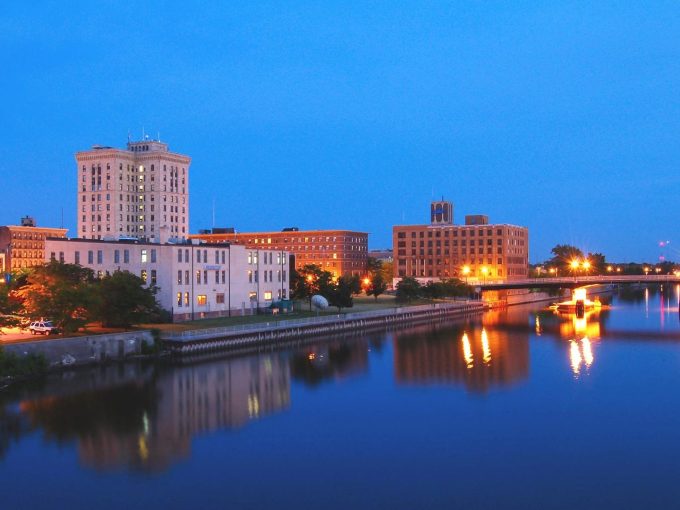
Saginaw combines very low prices with an active market. The median sale price was about $82,000 for the three months ending August 2026, with 126 homes sold in August alone. A 2025 regional housing study found that only 74 homes were listed for sale in March 2025, at a median list price of $74,500, and that 91% of owner-occupied homes were built before 1970.
Saginaw is one of the Michigan cities that levy a city income tax on residents and on nonresidents who work there. Include it in your budget.
Older homes mean older systems. Budget for roofs, furnaces and electrical updates, and get a thorough inspection.
The market has cooled a little: homes took 31 days to sell in August, compared with 21 a year earlier, and the median price fell 4.7%.
Notes for brokers
The City of Saginaw is an MSHDA targeted area, so repeat buyers can use MI Home Loan and the MI 10K DPA.
The 2025 study estimates the city needs 1,510 to 8,217 more for-sale homes by 2029. Renovated and newly built homes should sell quickly.
The study also found a 13.1% vacancy rate. Appraisers may have few recent sales of updated homes to compare against, so set contract expectations early.
River Rouge is a 3.4-square-mile Downriver city where the River Rouge meets the Detroit River. It has deep industrial roots: the Great Lakes Engineering Works built the SS Edmund Fitzgerald here in 1958, and Zug Island at the river mouth is home to U.S. Steel’s Great Lakes Works.
U.S. Steel shut the plant’s blast furnaces in 2019 with about 1,545 layoffs, but about 550 people still work on its galvanizing line, and the company says the site will stay. In 2026 Michigan is among the states bidding for a new U.S. Steel mini mill of up to $4 billion.
Commuting improved in 2026. The six-lane Gordie Howe International Bridge, linking I-75 with Ontario’s Highway 401 a short drive from River Rouge, opened to traffic on July 27, 2026.
Homes sold at 6% of list price in August, the highest among these 10 places, even though they took longer to sell. Expect to pay close to asking price for well-kept homes.
The city sits next to heavy industry. Visit at different times of day before you buy.
Notes for brokers
River Rouge is an MSHDA targeted area. Wayne County targeted-area income limits are $125,760 (1–2 people) and $146,720 (3+).
Muskegon Heights borders the City of Muskegon and is a few minutes from Lake Michigan. Just south of the city, 695-acre Mona Lake drains into Lake Michigan; Mona Lake Park on its north shore has a boat launch, fishing pier and beach. Trinity Health Muskegon Hospital provides 24/7 emergency and specialty care for the area.
Local incomes are the lowest among the 10 cities on this list (about $35,200), but a $90,000 median price still leaves a positive cushion. The city has more than 1,000 vacant lots, and in 2022 it welcomed its first newly built home since the early 2000s. A local developer announced plans for 250 new houses over five years; check current progress before relying on that figure.
Data USA puts homeownership at 44.9%, the lowest of the 10, so many homes are rentals. DSCR financing fits investors here, and owner-occupant programs fit renters who want to buy.
Detroit is the deepest market on this list, with nearly 1,500 sales in August 2026 and a median price of $103,000. That citywide median covers a very wide range. A 2026 statewide ALICE report found that 75% of households in ZIP code 48204 struggle to cover basic costs, while revitalized neighborhoods near downtown sell for far more.
Big projects are reshaping the city. The Gordie Howe International Bridge opened on July 27, 2026, giving Detroit a second six-lane crossing to Canada. Henry Ford Health’s $2.2 billion hospital expansion topped out in May 2026 and is scheduled to open in 2029. The Detroit Land Bank Authority reports more than 12,000 homes rehabbed and returned to use, and more than 6,000 residents who became homeowners through its programs.
What borrowers should know
Detroit offers up to $25,000 in down payment assistance to households earning up to 80% of area median income who have lived in the city for at least 12 months. You must contribute at least $1,000, and the grant is partly repayable if you move within three years. The city opened a third round in 2026; earlier rounds helped nearly 800 Detroiters buy their first homes.
Look at Land Bank auctions and Rehabbed & Ready homes, but have every home inspected and price in repairs.
Notes for brokers
Detroit is an MSHDA targeted area. City down payment assistance has its own rules, including a 30% housing-expense cap. Confirm the program’s layering rules and lender requirements before you structure the loan.
Homes took 50 days to sell in August, compared with 42 a year earlier, and sold at about 95% of list price. Concessions are realistic.
With about half of Detroit households renting, investor demand stays strong. Use DSCR loans for rental purchases and the city’s programs for renters becoming owners.
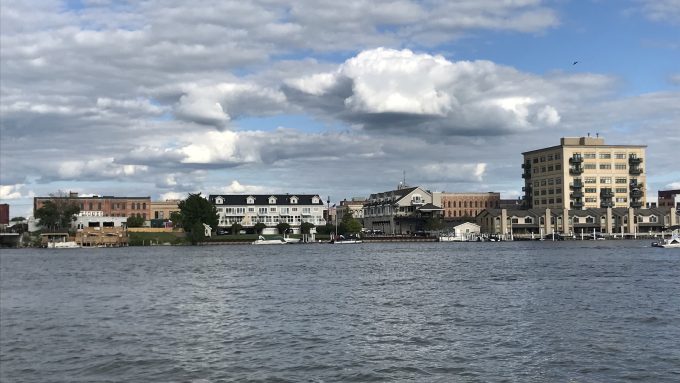
Bay City is the priciest place on this list, at about $139,000, and it still ranks ninth because local incomes are the highest of the 10 cities on the list, at about $49,400. It is also the most competitive market here. In August 2026, homes sold in a median of 24 days, at 98.9% of list price, and 38.3% sold above asking.
The city sits where the Saginaw River enters Saginaw Bay. Bay City State Park, about 2,389 acres, has a mile of sandy beach and Tobico Marsh, one of the largest remaining freshwater coastal wetlands on the Great Lakes. The 43-acre Uptown Bay City riverfront redevelopment includes a McLaren medical building. Delta College enrolled 8,581 students in fall 2025 and runs a downtown center in Bay City.
Ecorse is a Downriver city on the Detroit River, bordered by River Rouge, Detroit, Lincoln Park and Wyandotte. It became a city in 1941. Its first steel mill opened in 1923, and rolled and sheet metal, packaging and food processing remain its main industries.
The riverfront got an upgrade in 2025. John D. Dingell Park now has a rebuilt boat launch and an ADA-accessible kayak launch with a card-operated rental kiosk, plus new sea walls, lighting, a playground and a walking path.
Ecorse is the closest call on this list: it edged out Pontiac for 10th place by about $1,600. Small changes in rates or taxes can change whether a buyer qualifies, so run payment scenarios.
Wayne County’s higher property tax rate means taxes make up a larger share of the monthly payment.
Factors That Contribute to Affordability
The places on this list share more than low prices. These factors explain why they are affordable, and what can make a cheap home more expensive than it looks.
1. Low prices, older homes
Prices are low partly because many homes are old. A 2025 regional study found that 91% of owner-occupied homes in Saginaw and 87% in Bay City were built before 1970. Older homes are cheaper to buy but often need roofs, furnaces, windows or electrical work. That affects the buyer’s budget and the appraisal.
Michigan’s Homestead Property Tax Credit pays up to $1,900 for tax year 2025 to owners with household resources of $71,500 or less, on homes with a taxable value of $165,400 or less. Most homes on this list fall well under that value limit.
4. City income taxes
Michigan lets some cities tax income. On this list, Detroit, Flint, Saginaw and Muskegon Heights levy one, while Bay City, River Rouge, Ecorse, Dowagiac and the unincorporated communities do not. Detroit’s rates are 2.4% for residents and 1.2% for nonresidents who work there.
5. Insurance
Michigan homeowners pay about $3,071 a year on average for $300,000 of dwelling coverage, above the $2,872 national average. On cheaper homes the dollar cost is lower, but older roofs and wiring can raise premiums or limit coverage.
About 40% of Michigan households were below the ALICE threshold in 2024, meaning they could not cover basic costs. The state’s survival budget for a family of four was $78,216 a year, including $1,125 a month for housing. Every modeled payment on this list is below that housing figure.
Quality of Life in Most Affordable Places in Michigan
A low price only helps if the community works for daily life. Here is how these places compare on the basics.
So, What is the Cheapest Place to Live in Michigan?
When considering a move to Michigan, affordability is a key factor for many prospective residents. The cities highlighted in this list offer not only affordable housing but also access to essential amenities that enhance the quality of life. Each of these cities strikes a unique balance between low living costs and the availability of resources such as education, healthcare, and recreational opportunities.
Michigan’s most affordable places show that homeownership is still within reach on a typical local income. In every community on this list, the local median household earns more than our model says is needed to carry a median-priced home. The estimated monthly payment ranges from about $318 in Beecher to about $1,060 in Bay City.
For brokers partnering with AD Mortgage
These markets reward brokers who can handle small balances, older homes and a mix of buyers. Owner-occupants, first-time buyers, self-employed workers and investors all buy in these communities. AD Mortgage’s wholesale lineup covers each of them:
FHA loans with a 580 minimum FICO and 3.5% down for first-time and lower-income buyers in places like Flint, Saginaw and Detroit.
Fannie Mae HomeReady with 3% down for borrowers at or below 80% of area median income. Homebuyer education is required for first-time buyers.
DSCR loans for investors, qualifying on rental cash flow with a 620 minimum FICO, up to 80% CLTV and options below a 1.0 ratio. They fit rental-heavy markets such as Muskegon Heights, Beecher and Detroit, where about half of households or more rent.
12/24-month bank statement loans for self-employed borrowers, with personal, business or combined statements, a 620 minimum FICO or no score, and up to 90% CLTV on purchases.
ITIN loans with a 660 minimum FICO and up to 80% CLTV for borrowers without a Social Security number.
AD Mortgage offers a full suite of products to meet your clients’ needs, including DSCR loans, bank statement loans, and conventional loans. As a trusted mortgage lender, we provide flexible solutions and competitive rates to ensure you can deliver the best options for your borrowers.
Explore our exclusive broker package and benefit from partnering with AD Mortgage today. Plus, use our loan calculator for instant quotes and pricing on any product. Become a partner and access the best tools to grow your business.
Written by
Carl Holman
Communications Manager
As AD Mortgage’s Communications Manager, Carl Holman has more than 20 years of expertise in marketing, media relations, and communications, having spent 10 years of his career in mortgage lending and real estate. He holds a Bachelor’s in Journalism and Mass Communications from the University of South Carolina.